

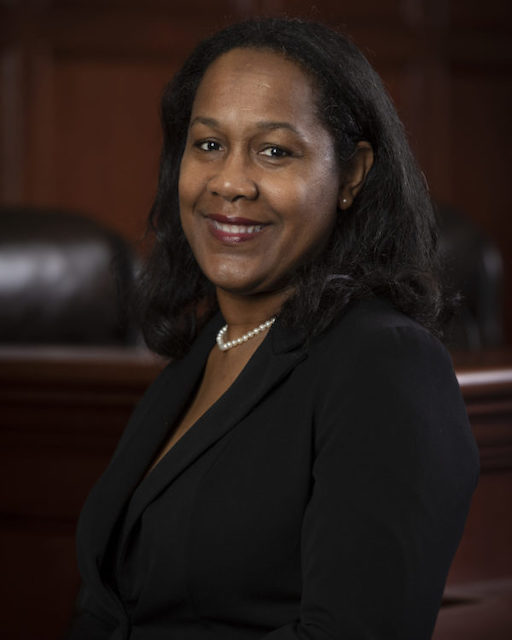
Professor Miranda Fleischer contributes to the wealth tax discourse by analyzing a taxation theory proposed a century ago by philosopher Eugenio Rignano: an inheritance tax imposed on old, unearned wealth. This inheritance tax would facilitate the goals of a wealth tax, including combating wealth concentration and providing greater tax preferences for earned wealth. Following a brief historical overview of transfer taxes and proposed alternatives, Fleischer analyzes the pros and cons of a wealth tax, suggests key design structures for implementation, and concludes with policy justifications in support of such a tax. This article stands out because Professor Fleischer proposes a comprehensive structural design for the tax and addresses key policy questions that would make a Rignano tax politically feasible and administratively workable.
In the overview, Professor Fleischer describes key features of the current transfer tax system, including the imposition of the tax on the donor, higher lifetime exemptions, and reduced rates. The effect of increasing exemptions is that fewer estates are required to pay the tax and more wealth is transferred tax-free. Further, the current tax design creates other avenues for the transfer of tax-free wealth such as the annual exclusion, even while recipients pay no income tax on gift and estate transfers, irrespective of their size. Fleischer discusses alternative proposals for taxing wealth such as imposing an income tax on gifts and bequests (subjecting them to similar tax rules applicable to lottery winnings), imposing a carryover basis in place of a stepped-up basis for purposes of the capital gains tax, and various other models such as inheritance and accession taxes.
Next, Fleischer evaluates the pros and cons of imposing a wealth tax. She describes the “liberal egalitarian” position as favoring a wealth tax to promote equality of opportunity, which may require equalization of resources and suppression of dynastic wealth which tends to produce disparate allocations of economic and political power. She describes how supporters of this position posit that the economic and political power flowing from dynastic wealth leads to still greater wealth inequality and threatens our democracy. On the other hand, she explains how opponents of a wealth tax argue that the redistribution of resources through the tax code is unfair, that inefficiencies of such a tax would discourage savings and investment, and that government should refrain from intruding into the sphere of private wealth.
Professor Fleischer then describes the psychological aspect of taxation and the importance of considering public perceptions of fairness. She discusses how policymakers should be mindful of the public perspective and the difficulties of explaining away concerns that differ from their own goals and ideals when definitions of tax fairness are not universal. For example, she discusses economist Steven Sheffrin’s concept of “folk justice,” loosely described as a perception of tax fairness that emphasizes reaping the benefits of earned wealth, while the academic perspective may instead emphasize curbing inequalities. She also describes how some opponents of the estate tax used the idea of folk justice to gain support for an estate tax repeal while supporters of the estate tax do not seem to have addressed ideas of folk justice in their campaign. This was an interesting part of the paper as she incorporated different perspectives and value systems in addressing tax fairness while showing conflicting and contradictory viewpoints from survey data.
As Professor Fleischer explains, a Rignano tax would differ from the current transfer tax system because it would shift the tax burden from the donor estate to the recipient’s estate by allowing tax-free transfers for bequests of earned wealth. Only previously inherited wealth would be taxed through an estate. For example, the first taxpayer’s earned wealth would transfer tax-free to the second generation. When that inherited wealth passed from the second generation to the third, all the unearned wealth would be taxed at a 40% rate. Any earned wealth by the second generation person would still transfer tax-free.. The next beneficiary’s estate, making a third transfer, would be taxed at a 100% rate under the original version of the Rignano tax.
This method of taxation would allow the greatest tax preference for earned wealth by imposing the entire tax burden on subsequent transfers of inherited wealth. Fleischer argues this method of taxation could serve as a compromise between opponents of wealth taxes (who would likely support tax-free transfers of earned wealth) and the “liberal egalitarians” (who would likely support a substantially increased tax on unearned wealth to address economic inequality and wealth concentration). Because both sides gain a little of what they want, this middle ground might be politically feasible and gain public support. Fleischer adopts the model but proposes a 40% estate tax rate on transfers of unearned wealth. She then proposes a model design.
The tax structure must be designed to support these goals of protecting earned wealth and addressing inequalities. Professor Fleischer proposes the ideal structure for implementing a Rignano tax comprised of the following elements: “(1) the base; (2) rates; (3) valuation; (4) frequency; (5) tracing; (6) transfers in trust; and (7) transition rules.” Here, she explores whether the base should focus on receipts or transfers by considering the psychological aspects, equality of opportunity, impact on wealth concentration, and ability to pay. She also examines lifetime and annual exclusion amounts to consider the psychological need to provide for family members as well as tax enforcement considerations.
The question of frequency is especially important because estate planners could easily develop expedients to avoid taxation and thus undermine the whole system. Professor Fleischer recognizes the design would need countermeasures to address skip transfers and to capture taxes at the right intervals; therefore, she suggests rules that mirror the existing generation-skipping transfer tax system. The most difficult parts of the structure lie in the valuation and tracing. Without an accurate method to trace inherited property, valuation would be moot. She acknowledges the challenges with valuation because asset values do not remain static, especially if held for long time periods. She proposes a model that considers the beneficiary’s choice about property management, property value fluctuation, and rate of return. In doing so, she proposes an imputed risk-free rate-of-return model that considers the impact of risk and choice.
Closely related, and the most difficult part of administering a Rignano tax, is tracing. To accurately impose the tax on the second and third transfers, the property must be identifiable and traceable. Tracing would require accurate record-keeping and cooperation by taxpayers, but the tax commissioner should not rely solely on voluntary compliance. Professor Fleischer proposes a model that would incorporate the first-in-time rule, similar to the current lifetime exemption process for reporting taxable gifts. Further, like other tax elections, she proposes the estate tax return should have an election, like the existing spousal portability rule, for applying the first-generation exemption and using a will or other document that identifies the property included in the exemption.
This article offers a fascinating contribution to the wealth tax debate while suggesting a practical solution for reform. Professor Fleischer’s proposals provide sufficient details to guide political leaders to implement a Rignano-style tax and give the policy justifications to enrich the intellectual debate of the real issues at stake, raising revenue and addressing inequalities. This article is timely, as we are on the precipice of major tax changes in estate and gift taxes in the coming year.




Excellent article, I share the idea that inheritances should not pass entirely to the heirs because this perpetuates social inequality, each individual, depending on the opportunities offered by a democratic system, should forge a future based on their preparation, However, I believe that establishing a system to monitor the correct transfer of unearned wealth can be very complex, especially if it involves large fortunes and whose assets can be dispersed in very complex corporate networks, while small succession acts They would be much easier to control and supervise by the State. I dare to assure you that these types of proposals would change the economic structures that exist today and allow greater social mobility.